Demand is accelerating
Electrification, infrastructure, and data systems require large volumes of critical minerals.

Modern life depends on critical materials.
They are becoming harder to source.
How we collect them matters.Electrification, infrastructure, and data systems require large volumes of critical minerals.
Land-based mining and conventional approaches carry significant environmental cost.
Polymetallic nodules offer access to key materials without drilling or blasting.
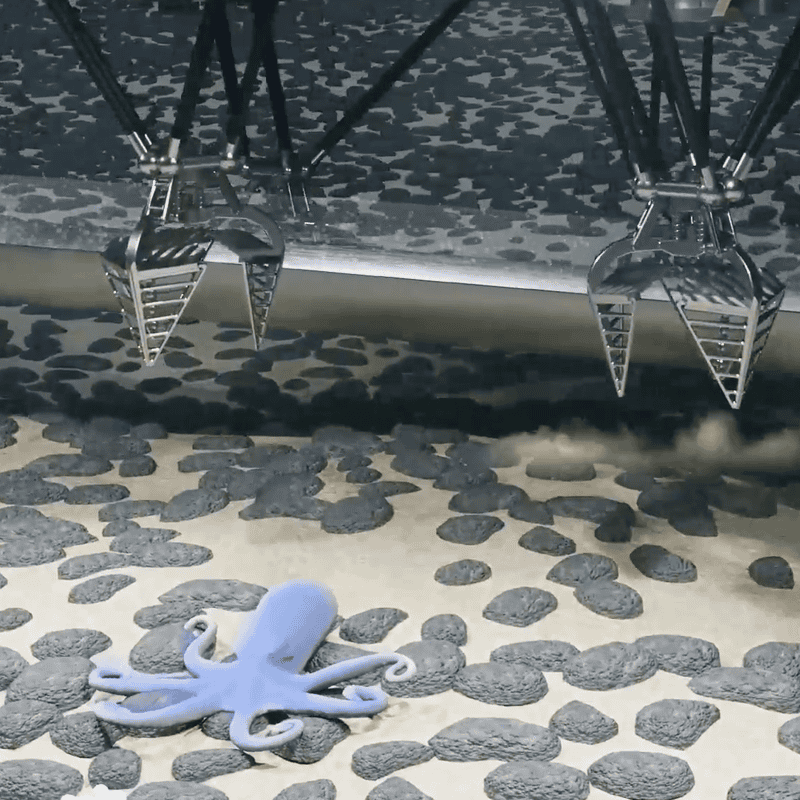
Impossible Metals uses AI-driven robotics to selectively identify and collect nodules — avoiding unnecessary disturbance.
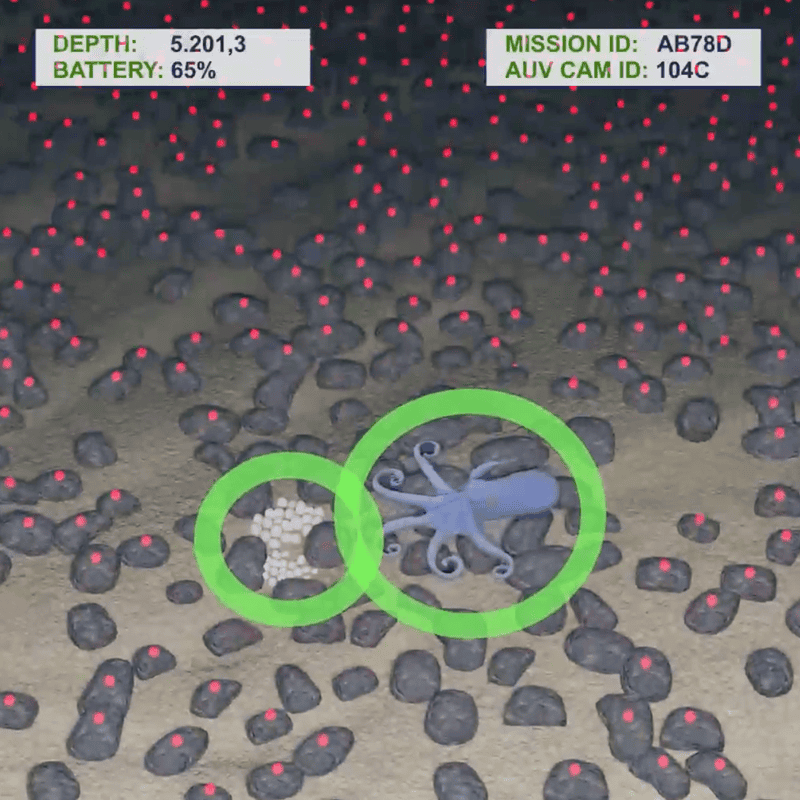
AI vision systems scan the seabed environment.
Target nodules are distinguished from marine life.
Robotic arms retrieve nodules individually.
Surrounding ecosystems remain undisturbed.
 Remove
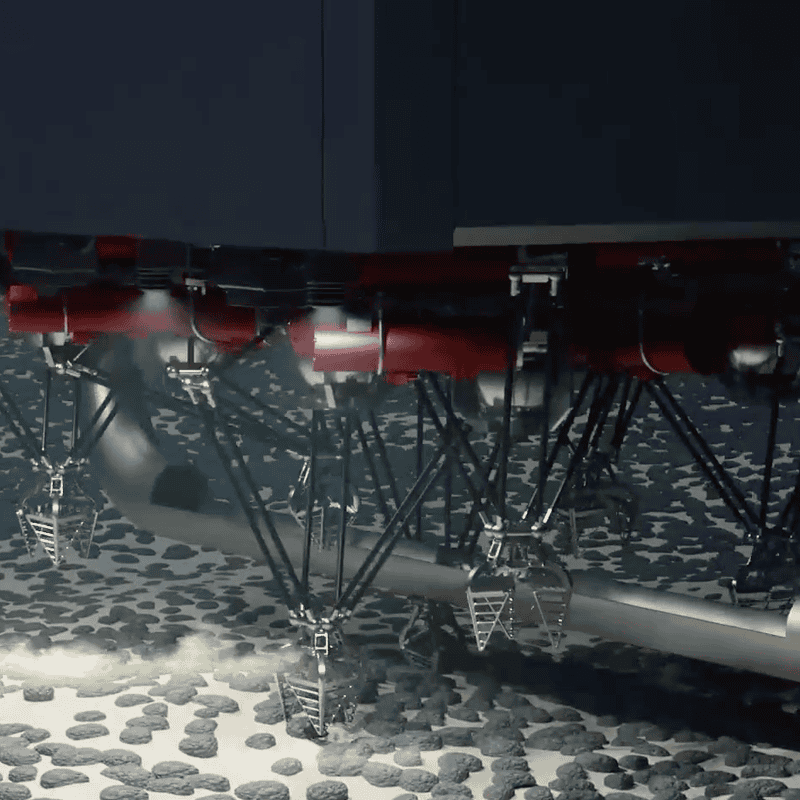
Arms, Camera, Conveyor, Hopper, Lights
Buoyancy Engine, Syntactic Foam, Thrusters, Control Surfaces
Control Electronics, Sensors, Modem, Battery, Frame
See the system in operation

August 24, 2026
July 7, 2026
January 22, 2026
February 20, 2026
January 25, 2026
January 22, 2026
November 5, 2024
February 19, 2024
January 3, 2024
Nickel, cobalt, copper, and manganese are the backbone of every electric vehicle, grid battery, and wind turbine — and demand is accelerating far beyond what today’s mines can deliver. The International Energy Agency projects these needs will roughly quadruple by 2040 under a net-zero pathway.
The question is not whether we source them.
The question is how — and at what cost to people and planet.
At Impossible Metals, we believe the seabed can be part of that answer — carefully, selectively, and only when the evidence supports it.
Our approach is grounded in three principles:
There is real debate around seabed minerals — some of it grounded in science, some of it outdated, and much of it conflating very different technologies. We welcome that scrutiny.
Because the stakes are too high for shortcuts — and too important for assumptions.
Environmental standards, compliance frameworks, and regulatory engagement.
Learn moreMarket opportunity, technology scalability, and growth potential.
Learn moreTechnology documentation, environmental research, and educational resources.
Learn moreWe approach environmental responsibility with rigor and transparency, focused on measurable outcomes rather than claims.
Our selective approach is designed to reduce environmental disturbance compared to conventional extraction methods.
We collaborate with research institutions to continuously study and understand deep-ocean ecosystems.
We publish our environmental monitoring data and methodology for independent review.